In this story
A note from Common Ground
Project editorial: distinguish documented practices from suggested personal activities.
The moving reminder
Imagine copying a festival reminder from last year into your phone and discovering that the date no longer fits. This is an invented everyday scene, but it poses a useful question: did the festival move, or did you change the calendar you were using to locate it?
Hong Kong Observatory calls the traditional Chinese Agricultural Calendar an integrated lunar-solar calendar. ‘Lunisolar’ is the useful English term: the system takes account of both Moon and Sun. Calling it simply lunar is common shorthand, but it leaves out half of the explanation. [S1]
Media selection · Reviewed by the project owner on November 5, 2026. Context images do not replace the story’s cited evidence.
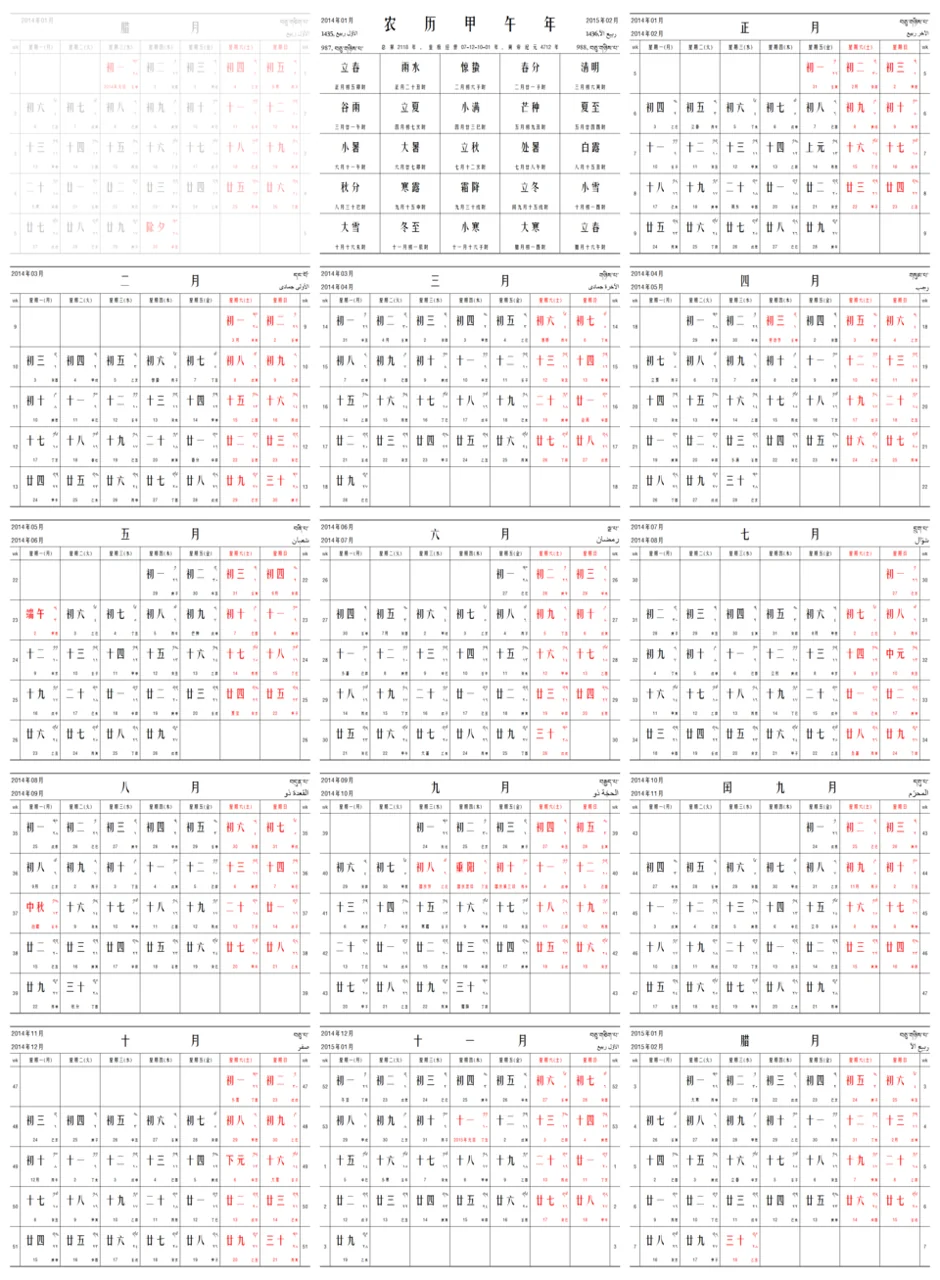
A historical calendar image. Use a current calendar source when you need this year’s dates.
Image source & license
Orienomesh-w · CC BY-SA 3.0. WebP delivery copy; resized if needed, composition unchanged. Original image & full credit · License
A month follows the Moon
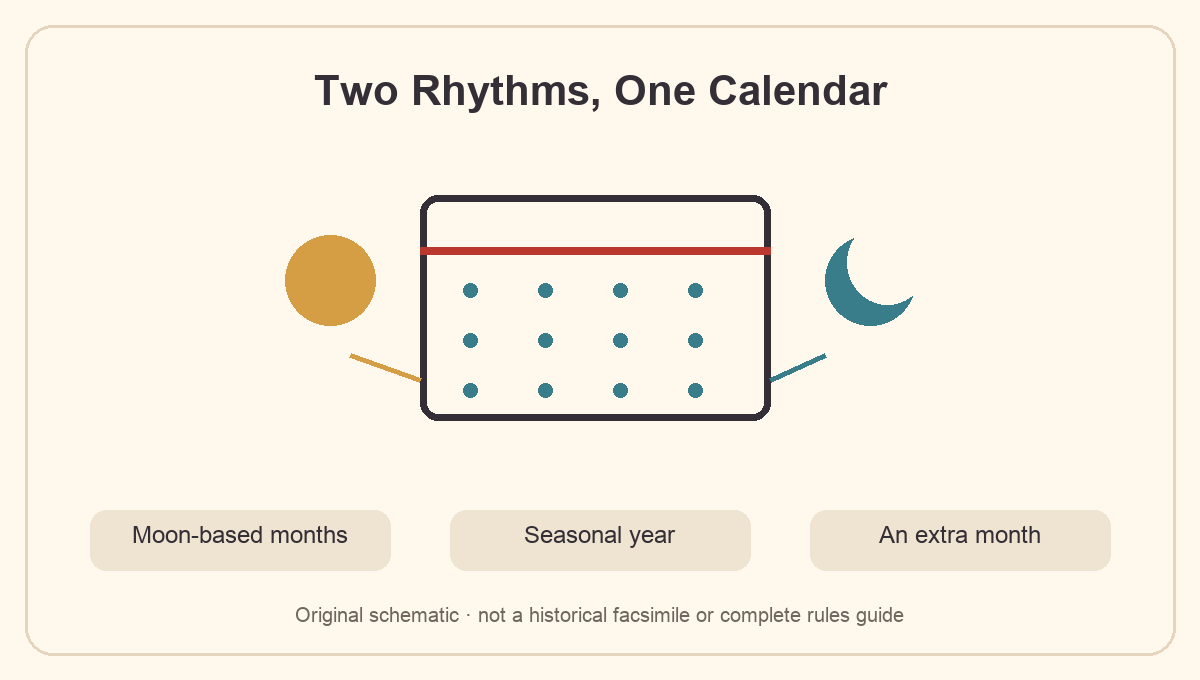
The observatory explains that months begin with a new moon. Twelve cycles between new moons total roughly 354 days, while the seasonal year is roughly 365 days. Those two totals do not line up. A festival located by a lunar month and day therefore need not fall on the same Gregorian date each year. [S1]
A twelve-month lunar year is roughly eleven days shorter than a solar year. That gap adds up. A date tied to a lunar month does not stay pinned to one date on a calendar that follows the solar year. This explains festivals scheduled by lunar month and day; it is not a rule for every Chinese festival.
Why add a month?
The Hong Kong Space Museum explains that an extra lunar month compensates for the accumulating difference between lunar months and the solar year. Its overview describes seven leap months across nineteen years on average. The adjustment helps keep the calendar connected to the seasonal year instead of allowing its months to drift endlessly through the seasons. [S2]
A leap month is not the same adjustment as adding February 29 in the Gregorian calendar. One inserts a month; the other adds a day. You should not use a simple instruction such as ‘subtract eleven days every year’ as a reliable festival-date converter, because the extra month changes the relationship. [S1] [S2]
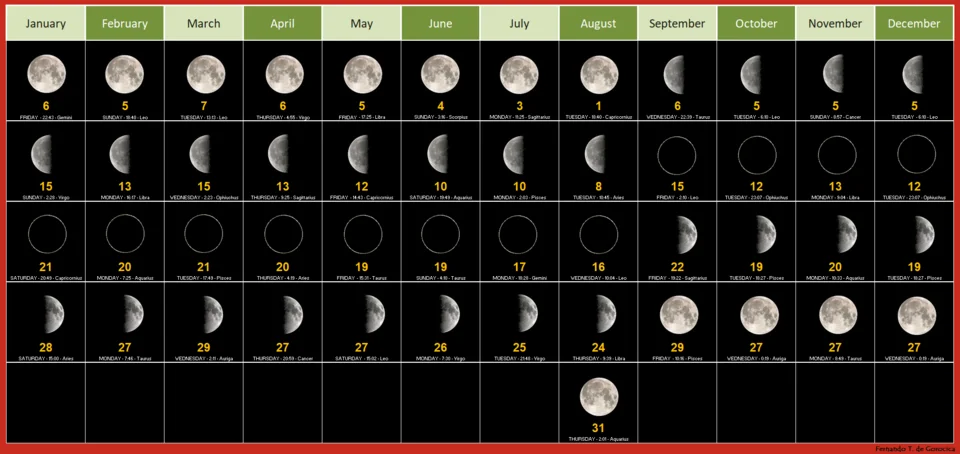
A 2023 Moon-phase chart. Compare the changing Moon with a calendar’s named festival dates.
Image source & license
Fernando de Gorocica · CC BY-SA 4.0. WebP delivery copy; resized if needed, composition unchanged. Original image & full credit · License
Use a table, keep the meaning
For a real invitation, first identify the festival and the year you mean. Then consult an authoritative calendar conversion table or the organizer’s dated announcement. Save the checked date with its year. This is practical editorial advice, not a calculation of any particular upcoming holiday, and it avoids creating false precision from a rough explanation.
You can also keep two lines in a reminder: the traditional calendar description and the Gregorian date you verified for that year. The first preserves the recurring cultural reference; the second helps someone arrive on time. Understanding why the dates differ makes the table easier to use without asking a short article to replace astronomical calculations.
3 optional questionsWant a tiny challenge?
A little practice, with room to try again.
Want a tiny challenge?
A little practice, with room to try again.
How did this land?
Just your reaction, kept in this browser. Tap again to change your mind.
A little trail to follow.
Want to dig into a detail? These links take you to the original sources. Our suggestions and imagined examples are labeled in the story.
- Hong Kong Observatory: Calendar (opens in a new tab)
Lunisolar definition, new-moon month starts, roughly 354 versus 365 days and leap-month adjustment. Substantive indexed text only; full page not parsed. Media playback not reviewed.
- Hong Kong Space Museum: Double Spring and Leap Month (opens in a new tab)
Solar and lunar cycles; extra month; seven leap months in nineteen years on average.
What detail would you like to understand more closely?
Your question, a memory, a different way your family does things — there's room for it here. These notes are just for you in this browser.
Downloads and copies include notes and corrections for this story. To send it to us, attach it yourself in an email to support@goodbye.help. Saved stories and practice scores stay out of the download.