In this story
A note from Common Ground
Common Ground editorial: distinguish documented details from our suggested ways of looking.
The page hides the team
A printed page can look like the work of one author. UNESCO’s description of Chinese engraved block printing instead begins with collaboration among several skilled craftspeople. Its account follows the preparation of a block, the transfer of a checked design, carving, testing, correction, and printing. This story concerns workshop technique, not a contest over who invented all printing. [S1]
Media selection · Reviewed by the project owner on November 5, 2026. Context images do not replace the story’s cited evidence.
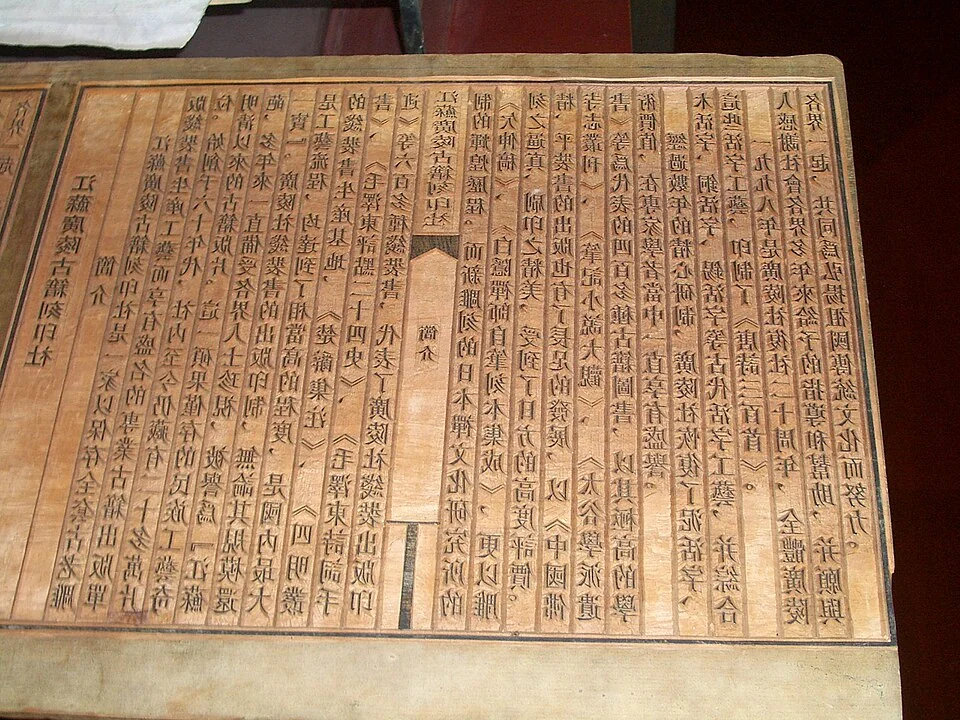
A carved printing block makes the page’s preparation visible.
Image source & license
User:Vmenkov · CC BY-SA 3.0. WebP delivery copy; resized if needed, composition unchanged. Original image & full credit · License
Cutting is not printing
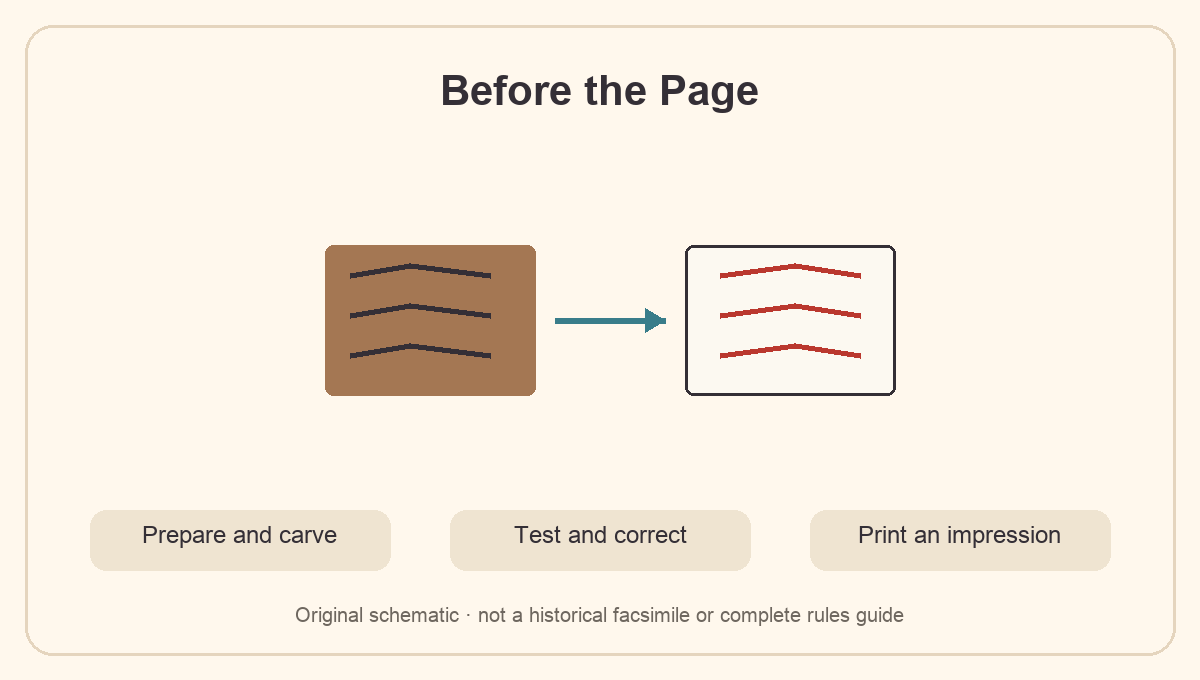
The described blocks use fine-grained pear or jujube wood. A design prepared on thin paper guides the cutting, leaving raised characters that carry ink. The account describes testing and corrections before printing. Only after the block is ready does the account move to inking and hand printing on paper. [S1]
Different decisions, one result
That sequence separates the carver’s task from the printer’s task. Cutting establishes the printing surface; printing uses that prepared surface to produce an impression. UNESCO also identifies uses ranging from traditional book formats to modern bindings and reproductions of older books. Its short description does not name a fixed job title for every worker or document every workshop’s staffing. [S1]
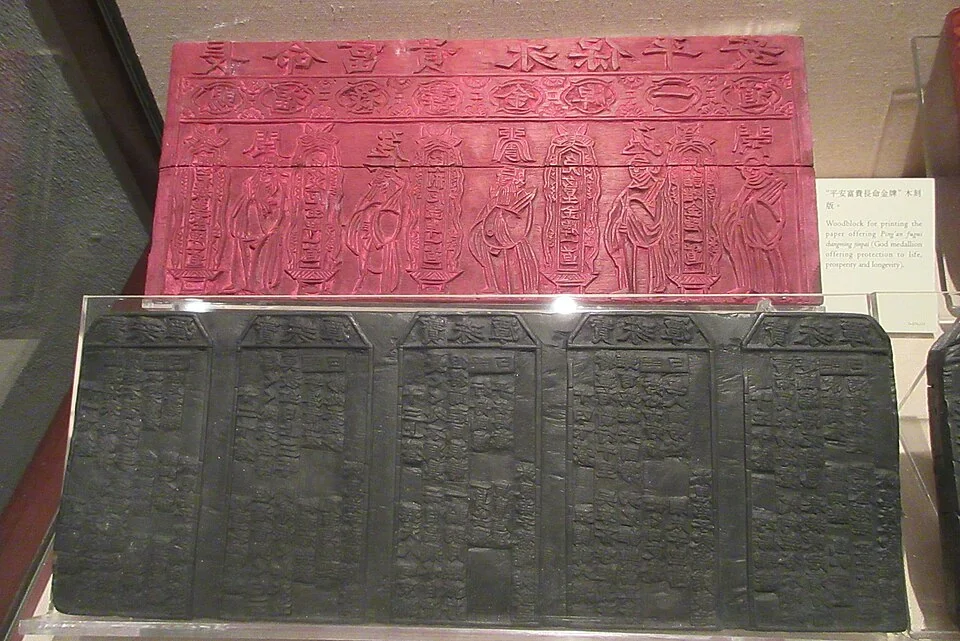
Printing material displayed in a museum. Let its record supply the workshop and historical context.
Image source & license
DAIMANdald · CC BY-SA 4.0. WebP delivery copy; resized if needed, composition unchanged. Original image & full credit · License
Try a careful comparison
Picture an invented American library event where a volunteer has designed a flyer and another volunteer checks the printout. A typo caught before production and a problem noticed on the final sheet call for different responses. The comparison can help explain a handoff, but a desktop printer is not a historical woodblock workshop.
When you look at a printed page, try asking two questions separately: what had to be decided before the printing surface was ready, and what had to happen when the impression was made? Keeping those questions apart makes room for kinds of skill that the finished page can easily hide.
Give the relay its credit
For a field note, make three columns labeled preparation, carving, and printing. Enter only details that the source actually assigns to those stages. Put uncertain responsibilities in a separate question rather than distributing them among imagined workers. A neat diagram should not manufacture a neat historical organization.
The result is a more generous way to read an object. You can appreciate the page’s words while also recognizing the coordinated work behind their appearance. Instead of searching for a heroic origin story, follow the decisions that had to survive each handoff. The page is your starting point; the shared work is what makes it interesting.
3 optional questionsWant a tiny challenge?
A little practice, with room to try again.
Want a tiny challenge?
A little practice, with room to try again.
How did this land?
Just your reaction, kept in this browser. Tap again to change your mind.
A little trail to follow.
Want to dig into a detail? These links take you to the original sources. Our suggestions and imagined examples are labeled in the story.
- UNESCO: China engraved block printing technique (opens in a new tab)
Search index body excerpt only; direct page returned human-verification screen. Supports collaboration, wood species, thin-paper transfer, raised characters, red/blue tests, corrections and hand printing; not global priority or fixed staffing.
What detail changed your first impression?
Your question, a memory, a different way your family does things — there's room for it here. These notes are just for you in this browser.
Downloads and copies include notes and corrections for this story. To send it to us, attach it yourself in an email to support@goodbye.help. Saved stories and practice scores stay out of the download.