In this story
A note from Common Ground
Common Ground editorial: distinguish documented details from our suggested ways of looking.
Start with the neck
The Kimbell Art Museum’s early fifteenth-century Flat-Sided Flask has an angled tubular neck and loop handles. Its catalogue cautiously connects this particular form to Islamic metal prototypes. It also notes that flat-sided flasks had earlier Chinese bronze precedents. The useful story is therefore a meeting of design possibilities, rather than a simple claim that one culture copied another. [S1]
Media selection · Reviewed by the project owner on November 5, 2026. Context images do not replace the story’s cited evidence.
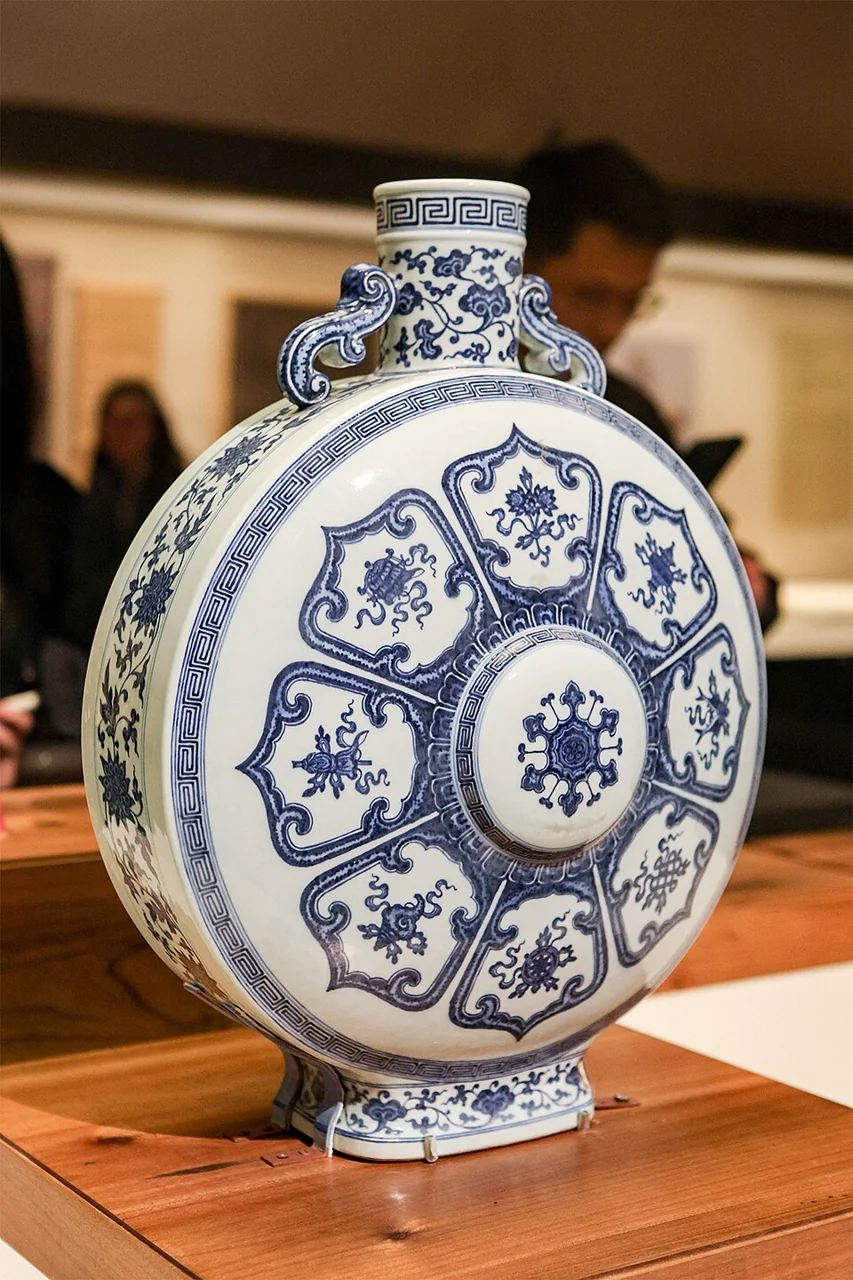
A related blue-and-white vessel, separate from the Kimbell flask discussed in the story.
Image source & license
Windmemories · CC BY-SA 4.0. WebP delivery copy; resized if needed, composition unchanged. Original image & full credit · License
Blue has a material history
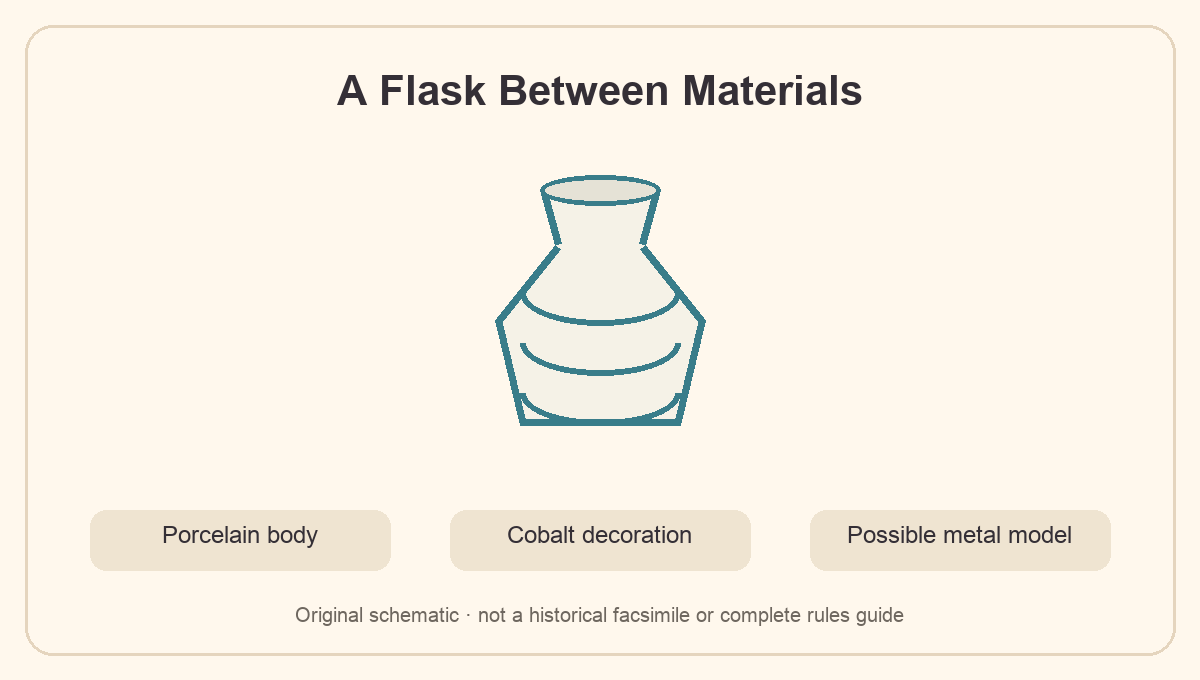
The museum identifies porcelain decorated with cobalt oxide beneath a transparent glaze—the blue comes from a material used in making the vessel. Several molded clay pieces were joined before firing. These details make this a particular manufactured object, rather than a generic example of blue decoration. [S1]
A color that traveled
The Victoria and Albert Museum explains that blue-and-white ceramics use cobalt decoration on a white body, generally beneath the glaze. Its account identifies both Yunnan and the Middle East as cobalt sources in the development of the craft. That broader history does not establish which deposit supplied the pigment in the Kimbell flask. Keeping those two levels of evidence separate matters. [S2]
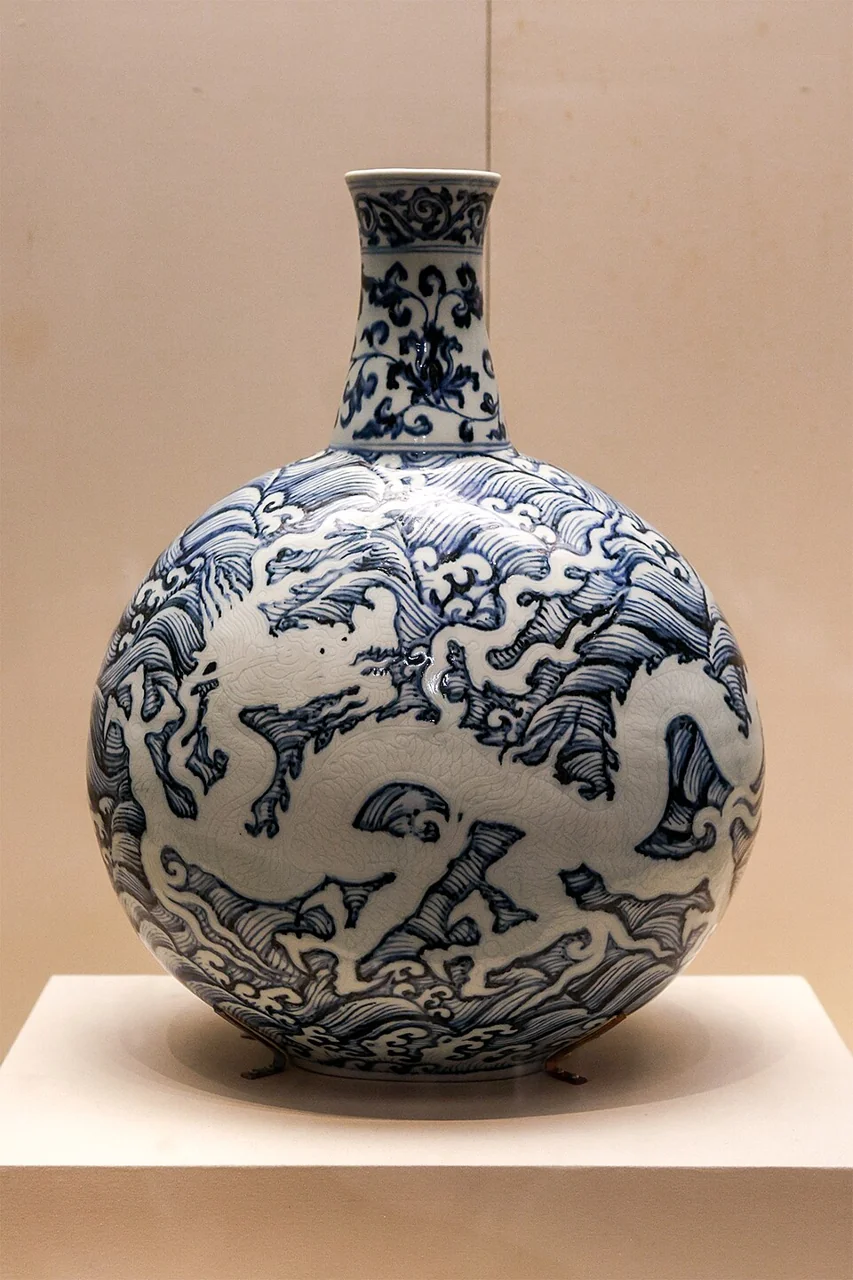
Another vessel for comparing profile and decoration. Material provenance still needs the object record.
Image source & license
Windmemories · CC BY-SA 4.0. WebP delivery copy; resized if needed, composition unchanged. Original image & full credit · License
Read shape before symbolism
Imagine an invented scene at an American community pottery class: someone sketches a familiar metal water bottle, then asks how it might work in clay. Where would the handle attach? Which parts would need joining? This is an exercise in noticing design decisions, not a reconstruction of the flask’s workshop or a claim about its intended use.
Try the same questions with the museum description. Begin with the neck, handles, and joined body before reaching for a symbolic explanation. A flower can be worth noticing simply because of where the painter placed it. You do not need a complete dictionary of motifs to begin paying careful attention.
Leave one question open
Write three short notes: a documented material, a proposed design connection, and something the catalogue does not establish. For this flask, the difference between a confident material identification and a qualified design attribution is especially useful.
Cross-cultural exchange becomes easier to understand when it has edges. We can discuss a particular vessel, a possible metal model, and a pigment’s wider history without assigning a single national identity to every design decision. The open question is part of the encounter, not a gap to fill with an attractive guess.
3 optional questionsWant a tiny challenge?
A little practice, with room to try again.
Want a tiny challenge?
A little practice, with room to try again.
How did this land?
Just your reaction, kept in this browser. Tap again to change your mind.
A little trail to follow.
Want to dig into a detail? These links take you to the original sources. Our suggestions and imagined examples are labeled in the story.
- Kimbell: Flat-Sided Flask (opens in a new tab)
Search index only; direct fetch 403. Supports early fifteenth-century date, form, qualified Islamic metal connection, Chinese bronze precedents, molded joined construction, decoration and medium.
- V&A: Chinese blue-and-white ceramics (opens in a new tab)
PARSED text. Supports general cobalt-under-glaze technique and Yunnan/Middle Eastern pigment sources; not this flask’s cobalt provenance.
What detail changed your first impression?
Your question, a memory, a different way your family does things — there's room for it here. These notes are just for you in this browser.
Downloads and copies include notes and corrections for this story. To send it to us, attach it yourself in an email to support@goodbye.help. Saved stories and practice scores stay out of the download.