In this story
A note from Common Ground
One object, a few good questions. You can look closely without pretending to know every symbol.
Start with the object
Picture yourself scrolling past a red dragon on a white vase. Maybe your brain goes straight to a movie monster. Fair enough. But before you decide what this dragon means, ask a smaller question: what is it doing on this particular object?
You don't need to memorize a symbol dictionary. Start with what you can see, then check the record.
Media selection · Reviewed by the project owner on November 5, 2026. Context images do not replace the story’s cited evidence.
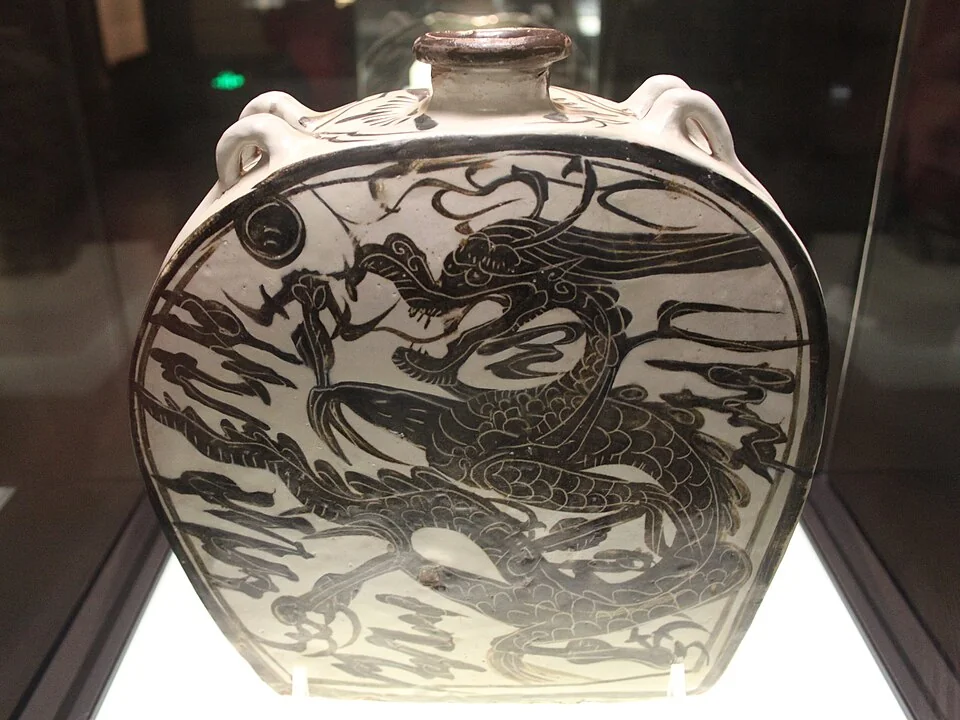
A related dragon-decorated vessel. Compare its shape and material with the objects discussed in the story.
Image source & license
Gary Todd · CC0. WebP delivery copy; resized if needed, composition unchanged. Original image & full credit · License
A dragon that meets the water
Here’s a Chinese object story with a surprising detail. A bronze washing basin from Anyang, now in the Smithsonian’s Freer collection, has a large curled dragon inside it, plus four smaller ones. The museum dates it to roughly 1250–1150 BCE. [S02]
The museum explains that ritual handwashing would have covered those dragons with water. So the design changed as the vessel was used: creatures visible in the empty basin became creatures beneath the surface. That’s the museum’s interpretation of the object, not proof that someone saw a real dragon. [S02]
Instead of asking only “What does a dragon symbolize?”, you can ask, “What happened when someone used this bowl?” That question brings a person back into the picture.
Now jump forward to a small porcelain vase
The Met’s collection includes a Chinese vase made in the Yongzheng period, 1723–35. It’s Jingdezhen porcelain, with copper-red decoration beneath a transparent glaze, and stands about 7¾ inches tall. The museum connects dragon imagery with water and imperial authority, among other meanings; it also links five-clawed dragon designs with court use. [S01] [D01]
That gives you useful context. It doesn’t tell you the name of this vase’s painter, who first owned it, or what any one viewer thought. The record doesn’t identify the maker. Leave those blanks blank. [D01]
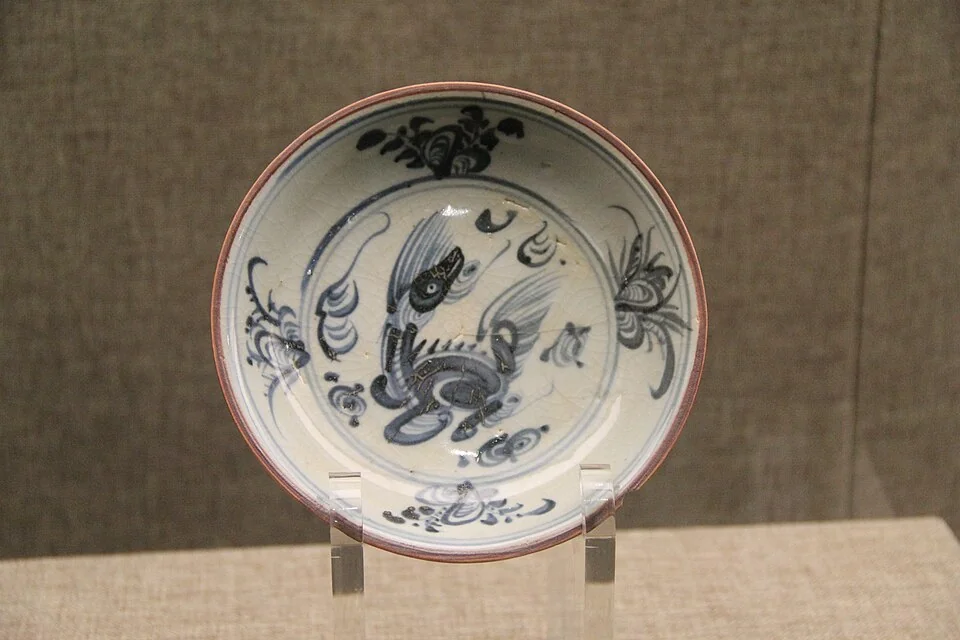
A dragon on a porcelain plate: the surrounding object gives the image another setting.
Image source & license
Gary Todd · CC0. WebP delivery copy; resized if needed, composition unchanged. Original image & full credit · License
An American connection you can try on
Imagine a friend wearing a shirt with a fierce-looking eagle. Is it a threat? Maybe it’s just the team they support. The animal alone doesn’t tell you enough. The shirt, the occasion, and the person wearing it help you understand the image.
That’s our analogy, not a claim that Chinese court art worked like American sports merchandise. It’s a reminder to ask about context before assigning a meaning.
You can investigate these objects through two US museum collections. You don’t have to treat “Chinese culture” as one enormous thing to decode all at once. One object is enough to start.
The video examines the David Vases, a different museum example from the objects discussed here. Use it to practice looking; it is not evidence about our featured vase.
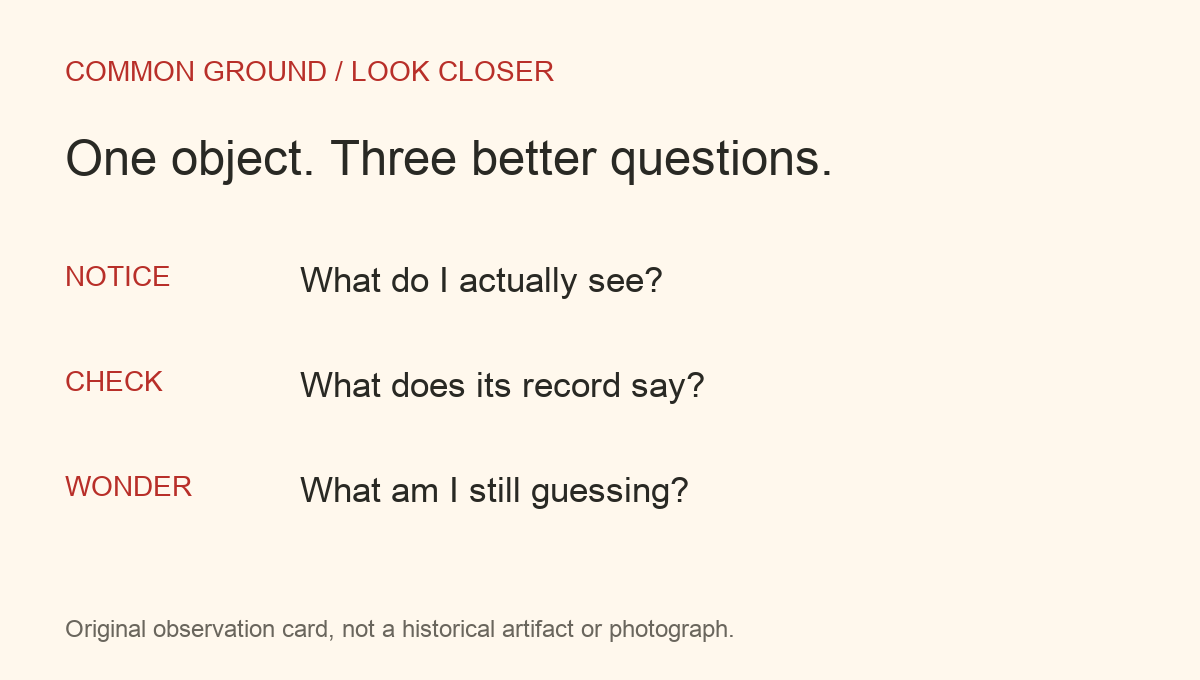
Take three questions with you
What do I actually see? What does the source say about this object’s place, date, and use? What am I still guessing?
3 optional questionsWant a tiny challenge?
A little practice, with room to try again.
Want a tiny challenge?
A little practice, with room to try again.
How did this land?
Just your reaction, kept in this browser. Tap again to change your mind.
A little trail to follow.
Want to dig into a detail? These links take you to the original sources. Our suggestions and imagined examples are labeled in the story.
- The Met — Vase with Dragon amid Clouds (opens in a new tab)
Yongzheng-period vase and object context, not proof of a particular individual owner.
- Smithsonian — Basin F1956.26 (opens in a new tab)
Museum interpretation of dragons under water in this particular basin.
- The Met collection API — object 42364 (opens in a new tab)
Recorded API response is in research/content-2026-11-01. It does not identify the maker.
What would you like to ask about art & objects?
Your question, a memory, a different way your family does things — there's room for it here. These notes are just for you in this browser.
Downloads and copies include notes and corrections for this story. To send it to us, attach it yourself in an email to support@goodbye.help. Saved stories and practice scores stay out of the download.