In this story
A note from Common Ground
Looking closely is a skill you can practice, even before you can read the words.
You don’t have to read every word to start looking
Stand in front of a calligraphy scroll and you may feel you’re missing the password. If you can’t read it, what are you supposed to see?
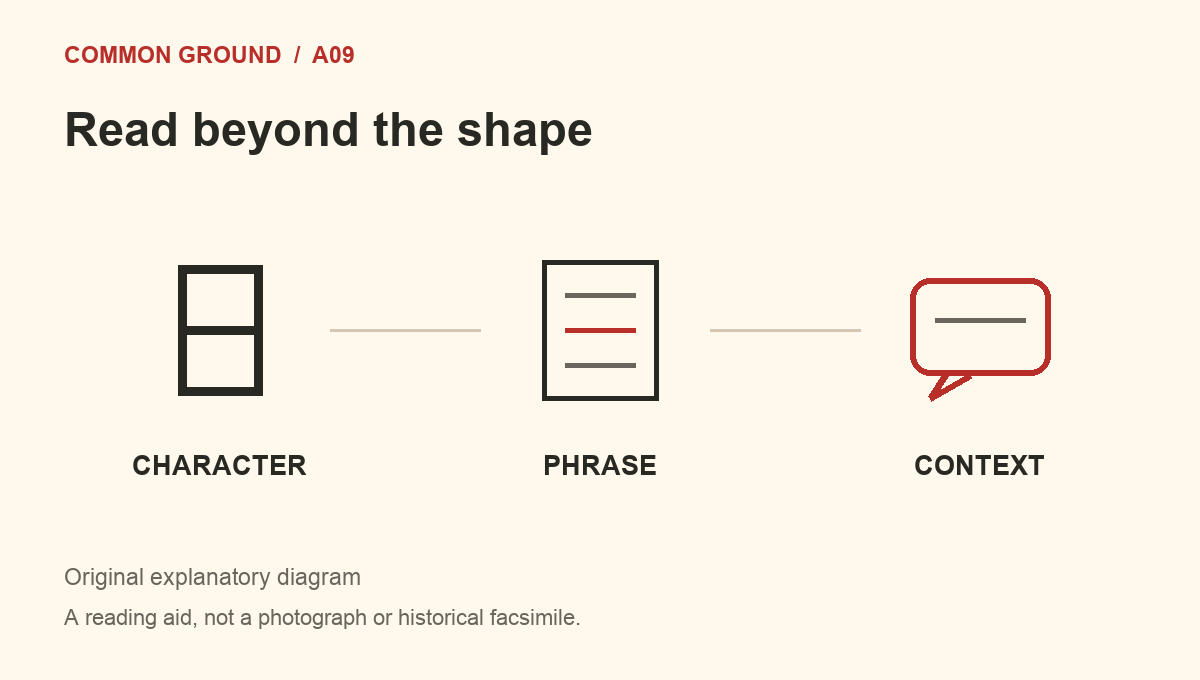
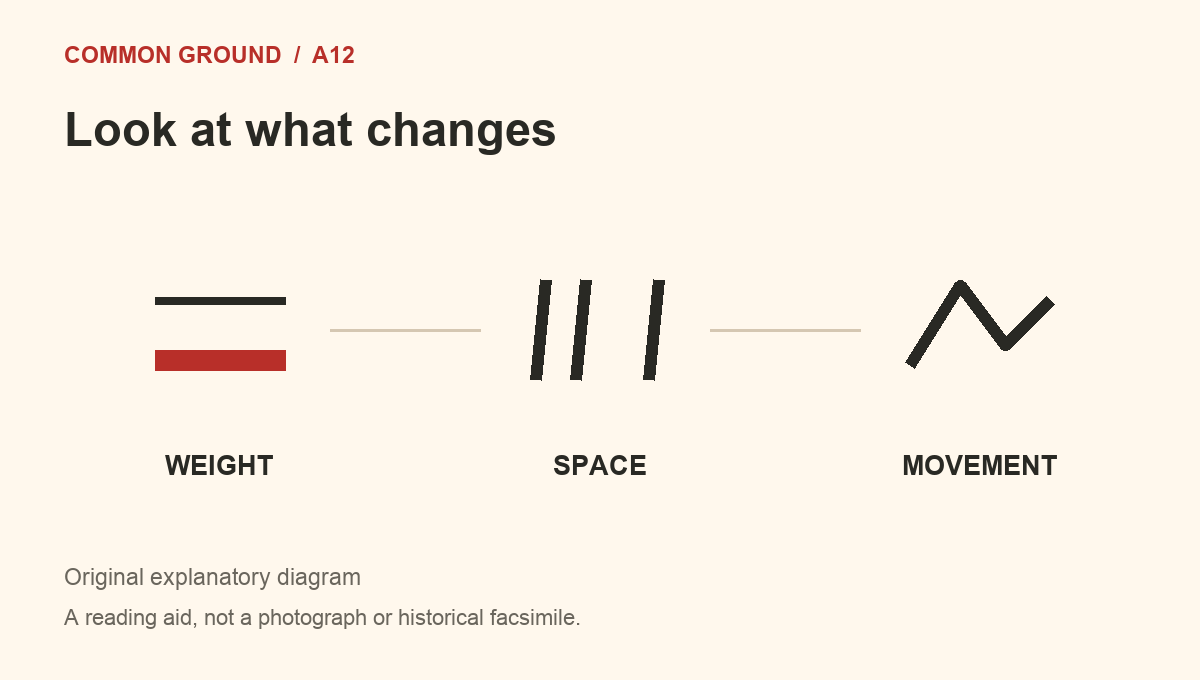
Start with what the label can tell you, then look at the marks: where they get heavy, where they thin out, and how the spaces hold the writing together. That is a way into looking, not a substitute for translation.
Media selection · Reviewed by the project owner on November 5, 2026. Context images do not replace the story’s cited evidence.
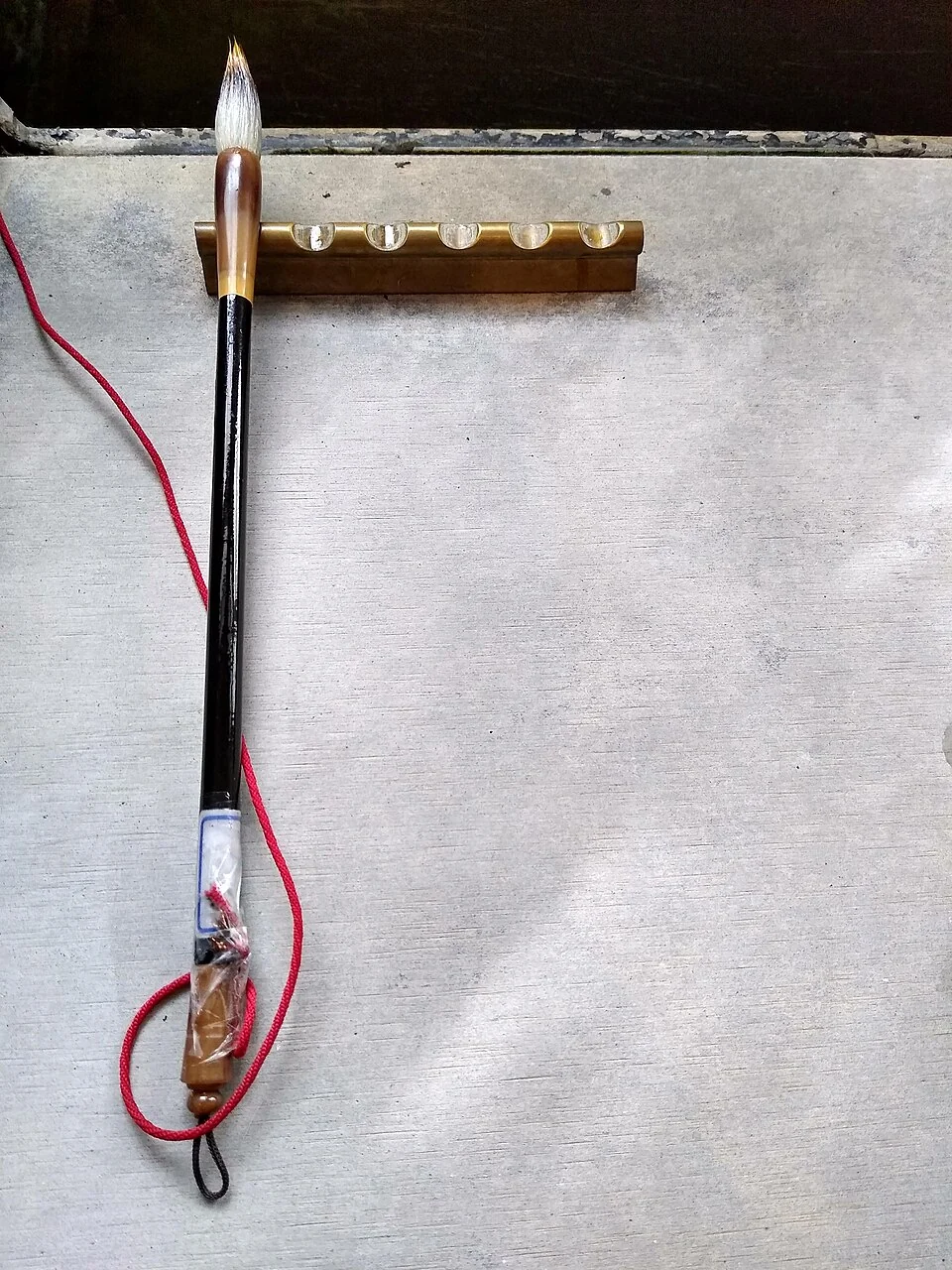
A calligraphy brush displayed as an object. Notice the handle and working end separately.
Image source & license
Mx. Granger · CC0. WebP delivery copy; resized if needed, composition unchanged. Original image & full credit · License
Letters that became something to study
The National Palace Museum describes the Shiqi Modelbook as a collection of letters associated with Wang Xizhi, who lived from 303 to 361. The letters were written to friends in his later years. The title comes from the opening characters meaning ‘seventeen.’ [S1]
A letter to a friend is a surprisingly approachable place to enter an art form that can feel monumental. Communication and the shape of the writing are both worth noticing.
Here’s the twist: the museum says the earliest Shiqi Modelbook, known from the Tang dynasty, no longer survives. Later copies, imitations, and engravings help us understand it. Check exactly what the label calls the object you are viewing before assuming it is Wang Xizhi’s own ink on paper. [S1]
A Washington exhibition in 1980
The Smithsonian Archives records a Chinese calligraphy exhibition at the Freer Gallery in Washington, DC from May to November 1980. It included twelve handscrolls acquired in 1979 and was organized by curator and calligrapher Shen C. Y. Fu. [S2]
That’s a real American museum story, not a claim that the exhibition is open today. It gives you a local question to carry into another collection: Why did a curator choose these works together?
Here’s an imagined comparison. You look at two handwritten notes from the same American friend: a quick reminder and a carefully written birthday card. You notice pace and spacing before reading every word. That helps explain how to begin looking. It does not mean calligraphy is handwriting analysis or that you can diagnose someone’s personality from a stroke.
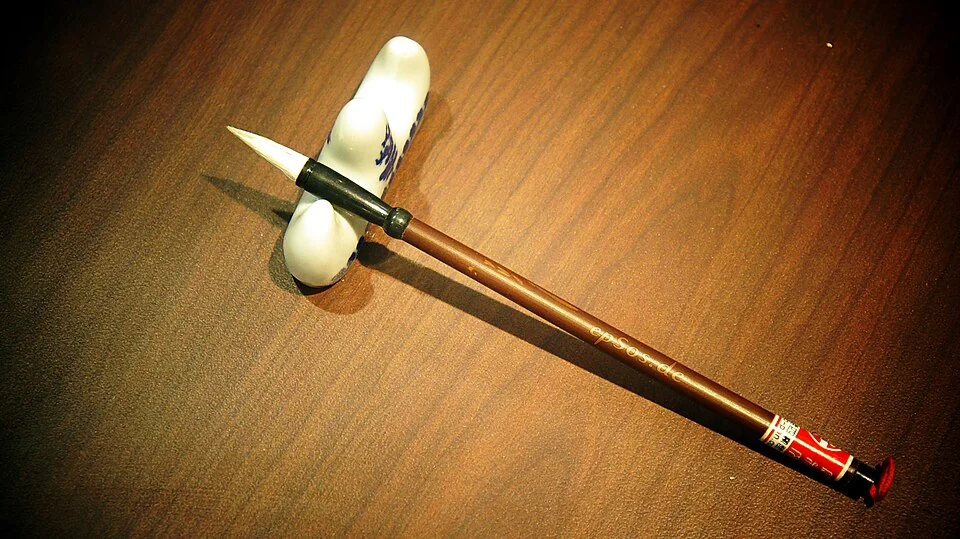
One writing setup. The arrangement brings the work of the hand a little closer.
Image source & license
epSos .de · CC BY 2.0. WebP delivery copy; resized if needed, composition unchanged. Original image & full credit · License
Try a looking exercise before a brush exercise
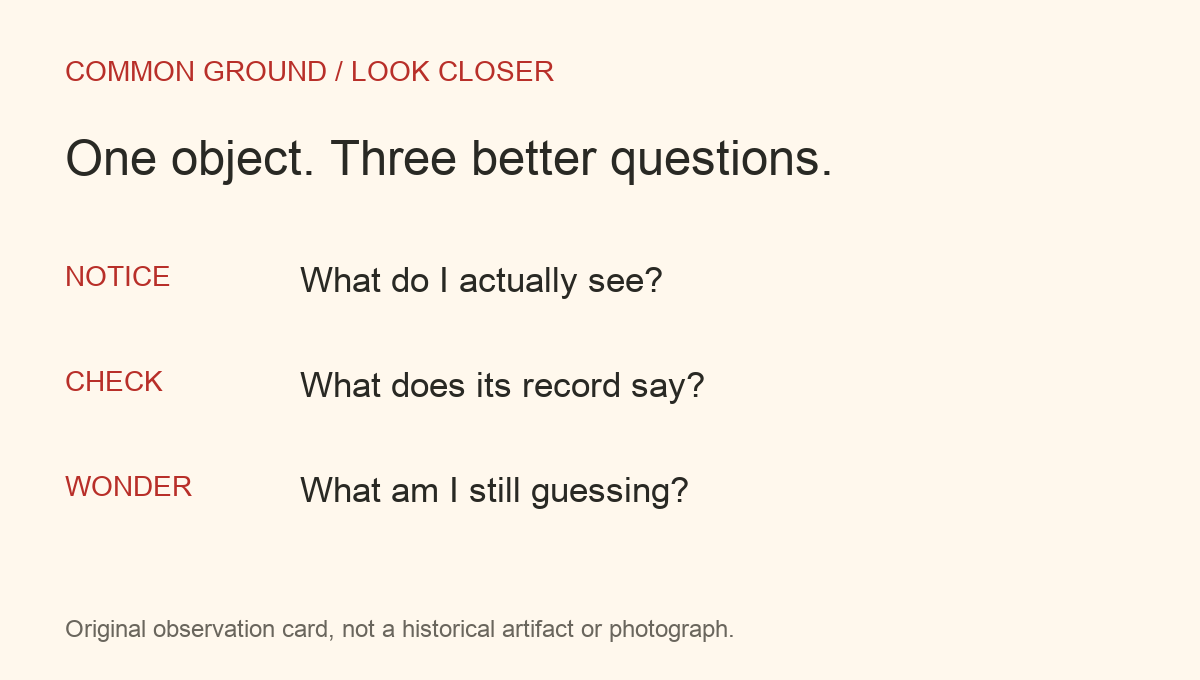
Choose one museum example with a readable label. Find the writer, the date or period, and the kind of object. Then point to one spot where the marks change: a thicker line, a tighter turn, a bigger gap. Say what you see before reaching for art-class vocabulary.
The Asian Art Museum introduces individual strokes and yong, the character meaning eternity, as a place for beginners to start. Our diagram is a separate looking prompt about thick and thin marks. It is not an authentic character, a historical imitation, or a lesson in correct stroke order. [S3]
Finally, compare your observations with the label or an educator’s explanation. Did the translation change what you noticed? Keep both the words and the visual experience in the conversation. You don’t need to pretend to read Chinese to ask a thoughtful question.
3 optional questionsWant a tiny challenge?
A little practice, with room to try again.
Want a tiny challenge?
A little practice, with room to try again.
How did this land?
Just your reaction, kept in this browser. Tap again to change your mind.
A little trail to follow.
Want to dig into a detail? These links take you to the original sources. Our suggestions and imagined examples are labeled in the story.
- National Palace Museum — The Dragon of Calligraphy: Shiqi Modelbook (opens in a new tab)
Wang Xizhi dates, letters to friends, and title; past exhibition 2016, not a current recommendation.
- Smithsonian Archives — Chinese Calligraphy on Display at Freer (opens in a new tab)
1980 exhibition, handscrolls acquired in 1979 and curator Shen C. Y. Fu. Photo has usage restrictions, not reproduced. Current direct access returned a rejection page during the November 1 maintenance check; archival details remain based on prior indexed evidence, not a fresh page reading.
- Asian Art Museum — Chinese Character and Brushstrokes (opens in a new tab)
Introductory page on strokes and the character yong. Our thick/thin diagram is an original looking prompt, not a copied historical example or a stroke-order lesson.
What would you like to ask about art & objects?
Your question, a memory, a different way your family does things — there's room for it here. These notes are just for you in this browser.
Downloads and copies include notes and corrections for this story. To send it to us, attach it yourself in an email to support@goodbye.help. Saved stories and practice scores stay out of the download.