In this story
A note from Common Ground
You are visiting a person, not sitting an etiquette exam. A small question can help.
A thoughtful question beats a memorized rule
You’ve been invited over. You want to bring something nice. Ten minutes online later, you’re worried that every possible object is a cultural mistake.
Try a smaller job: find out what this host would actually appreciate. This guide is for a first social visit, not a wedding, a business negotiation, or a guide to every Chinese-speaking community.
Media selection · Reviewed by the project owner on November 5, 2026. Context images do not replace the story’s cited evidence.
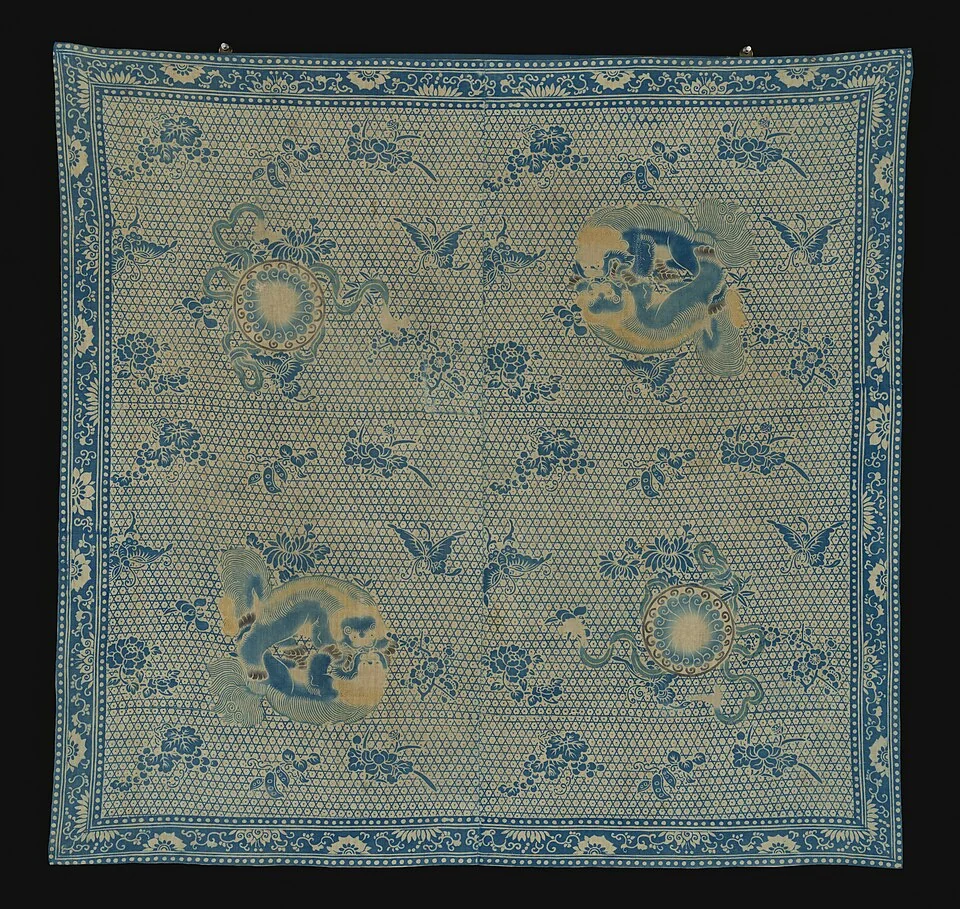
A Chinese wrapping cloth recorded in a museum collection: presentation has a material history, too.
Image source & license
Unknown author — see source · CC0. WebP delivery copy; resized if needed, composition unchanged. Original image & full credit · License
The grandmother’s dish that breaks the checklist
In a Smithsonian account of a 2018 Lunar New Year celebration, a cultural interpreter described missing her grandmother’s radish cake. Her family in Taiwan didn’t have dumplings for the holiday, even though dumplings were important to many families, particularly in northern China. [S1]
At the Washington event, Chinese students from American University shared their own experiences so visitors could hear more than one version of the holiday. [S1]
That is a small, useful cultural story: people explaining their own family traditions made the picture more accurate. A confident checklist saying ‘Chinese families always serve dumplings’ would have erased the grandmother’s dish. Gift advice can make the same mistake when it forgets the person receiving the gift.
Now picture the American host
Imagine arriving at a US potluck with a gorgeous pie. Your friend has already made three desserts and was hoping someone would bring sparkling water. The pie wasn’t offensive. You simply solved a problem nobody had.
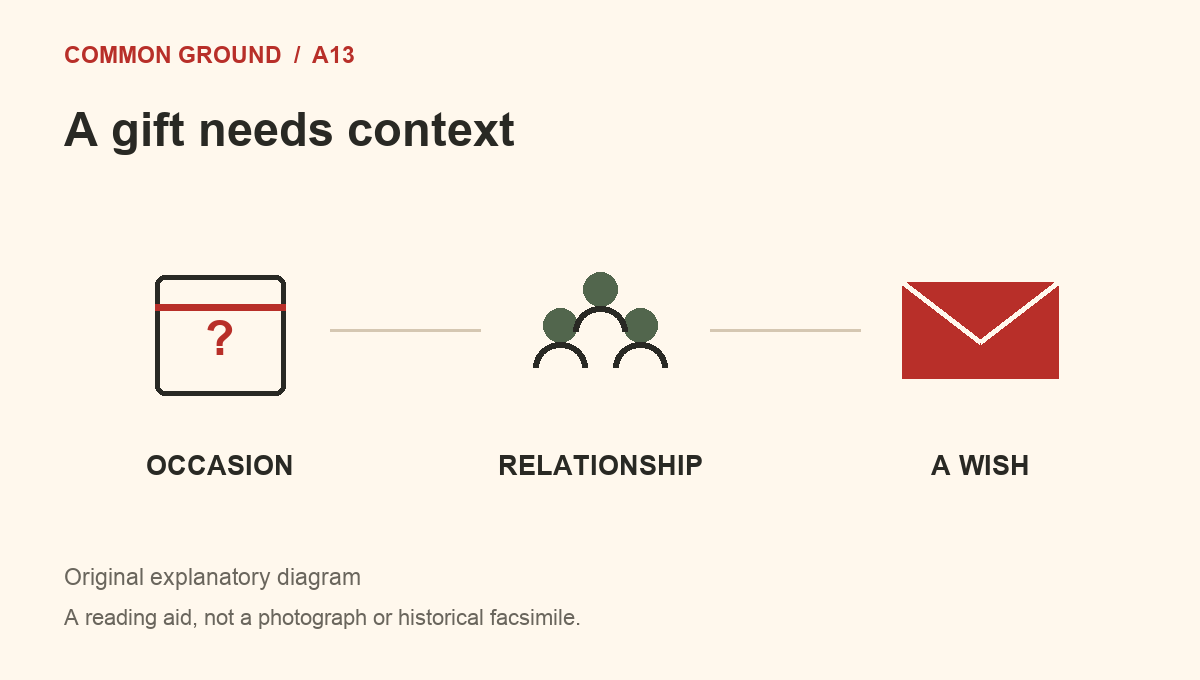
That’s an imagined scene, not a survey about Americans. Its point travels well: a gift’s usefulness depends on the relationship and occasion. Asking is part of being considerate.
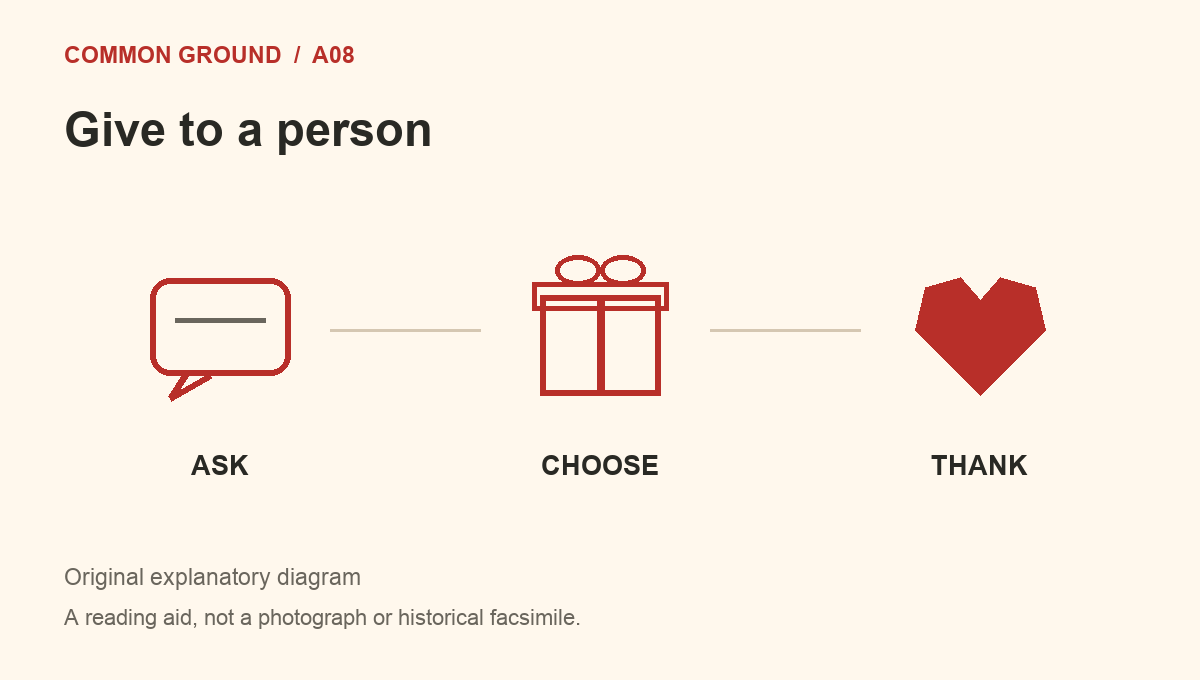
You can be warm without asking someone to teach you an entire culture. Try: ‘I’d love to bring a small thank-you. Is there something you’d enjoy, or would you prefer I just bring myself?’
If the answer is ‘Nothing, really,’ don’t turn the visit into a contest to prove your generosity. You can write a short thank-you afterward. If your host suggests a food, ask about preferences rather than guessing.
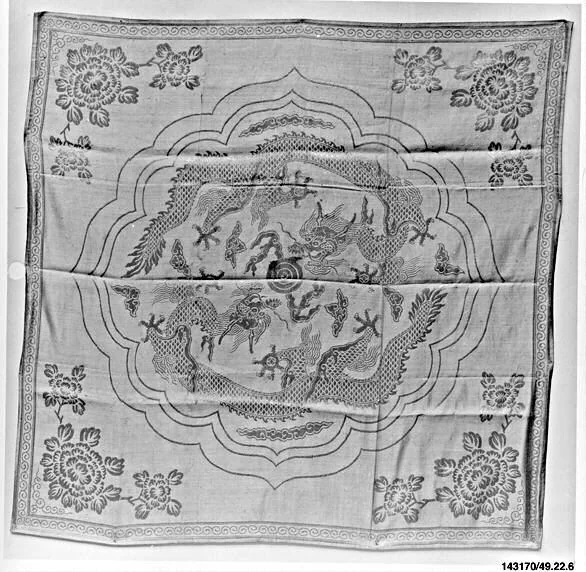
Another wrapping-cloth design. Think about the recipient as well as what surrounds the gift.
Image source & license
Unknown author — see source · CC0. WebP delivery copy; resized if needed, composition unchanged. Original image & full credit · License
Keep the gift smaller than the visit
Keep the gift smaller than the visit. Choose something that fits your budget and what your host told you. A note as simple as “Thanks for having me—I’m looking forward to catching up” can do the job without a speech about symbolism.
Ask privately if money, formal etiquette, or a major celebration is involved. Those situations deserve their own context. There is no universally correct dollar amount or object in this article.
If a friend shares a rule their household follows, listen. Treat it as valuable information about their household, not automatic proof that everyone else follows it too. You’ve learned something more useful than a list of things to fear.
The video presents gift taboos; this story does not treat them as universal rules. Ask your host what applies to this visit.
3 optional questionsWant a tiny challenge?
A little practice, with room to try again.
Want a tiny challenge?
A little practice, with room to try again.
How did this land?
Just your reaction, kept in this browser. Tap again to change your mind.
A little trail to follow.
Want to dig into a detail? These links take you to the original sources. Our suggestions and imagined examples are labeled in the story.
- Smithsonian — Embracing the Year of the Dog (opens in a new tab)
2018 family radish-cake account and American University participants. Supports variation, not universal gift rules.
- Smithsonian — Lunar New Year overview (opens in a new tab)
Further reading on the museum’s Lunar New Year program; not evidence for a universal gift rule.
What would you like to ask about everyday culture?
Your question, a memory, a different way your family does things — there's room for it here. These notes are just for you in this browser.
Downloads and copies include notes and corrections for this story. To send it to us, attach it yourself in an email to support@goodbye.help. Saved stories and practice scores stay out of the download.