In this story
A note from Common Ground
The amount is not the first question. Start with the people and the occasion.
Start with the relationship, not a dollar amount
You’ve seen a red envelope, but now someone has invited you to a celebration. Are you supposed to give one? To whom? How much?
Pause before searching for a universal number. The useful first question is what this family does for this occasion. This guide explains the idea and gives you a way to ask. It doesn’t set a cash amount.
Media selection · Reviewed by the project owner on November 5, 2026. Context images do not replace the story’s cited evidence.
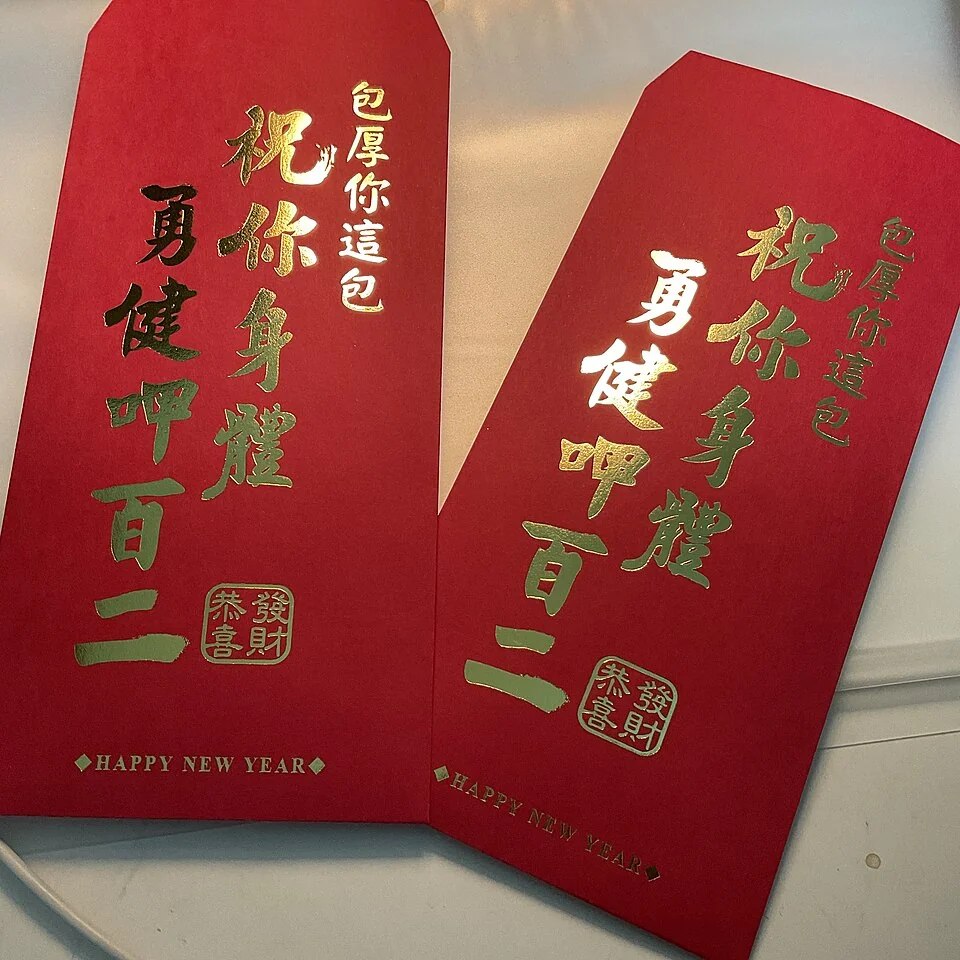
Red envelopes close up. Their designs offer a conversation starter; amounts depend on the occasion and family.
Image source & license
AH-LOD · CC BY-SA 4.0. WebP delivery copy; resized if needed, composition unchanged. Original image & full credit · License
A story about protecting a child
Singapore Chinese Cultural Centre’s Culturepaedia describes red packets as cash gifts carrying blessings, used for occasions including Chinese New Year and weddings. It records different names used in Singapore, including Hokkien angbao and Cantonese lai see. [S1]
The same entry tells a legend about Sui, a being that threatens sleeping children. In the tale, coins wrapped in red paper help protect a child. [S1]
Treat that as a legend people tell about the custom, not a proven historical origin or a medical explanation. Its emotional shape is easy to understand: adults want a child to be safe, and a small gift makes that wish visible. The source describes a Singapore Chinese context; its details are not automatic rules for every household.
The envelope gets a new route
In February 2021, the New York–based Asian American Arts Alliance presented a Red Envelope Project by artists Cinthia Chen and Tina Hanaé Miller. They reimagined the Sui story through an exchange that could travel between generations in both directions during a period when gathering in person was unsafe. [S2]
That is a documented adaptation, not a new rule for everybody’s Lunar New Year. It shows people making a familiar form speak to their circumstances.
If you’ve mailed a birthday card to someone you couldn’t visit, you already have an entry point into that feeling. The comparison is about carrying care across distance, not claiming a birthday card and a red packet have identical meanings.
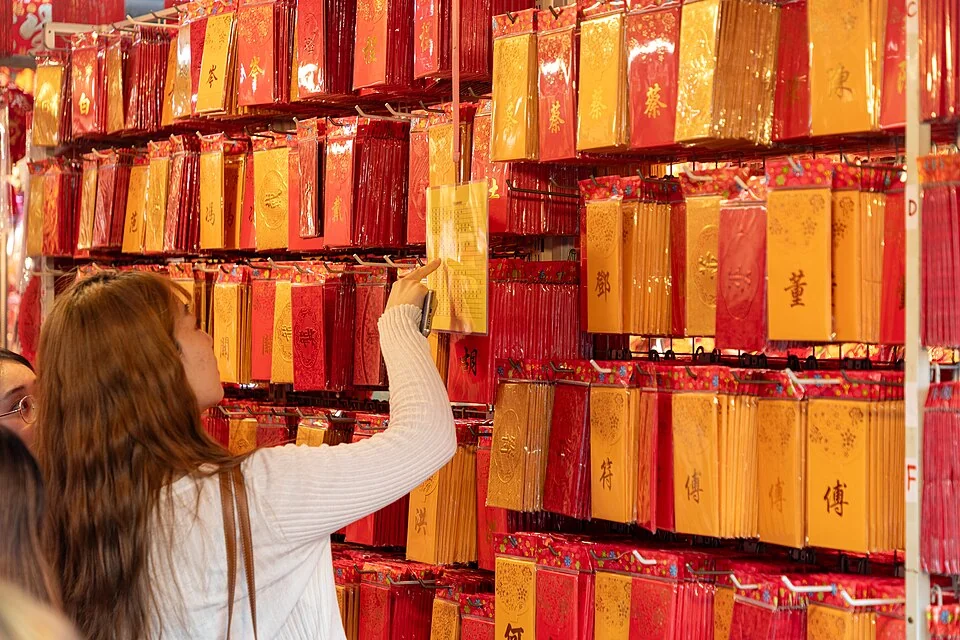
A Singapore shop display of red envelopes: a particular local scene, with plenty of choices.
Image source & license
Aaaatu · CC BY-SA 4.0. WebP delivery copy; resized if needed, composition unchanged. Original image & full credit · License
Ask quietly; keep the answer local
Try: ‘I’m new to your family’s celebration. Do guests usually bring anything, and is there anything you’d like me to know about red envelopes?’
If they suggest giving one, ask a trusted host privately about recipients and an appropriate amount. Don’t make someone explain their finances in front of a room. If you receive one, thank the giver and follow your host’s lead about what happens next.
For a separate learning activity, the Asian Art Museum offers a make-your-own red-envelope project with a written wish inside. That’s a craft invitation, not a claim that a note replaces money at every real event. [S3]
The envelope is small; the relationship is the interesting part. Start with a quiet question, thank the person who helps you, and let this family’s answer guide this visit.
3 optional questionsWant a tiny challenge?
A little practice, with room to try again.
Want a tiny challenge?
A little practice, with room to try again.
How did this land?
Just your reaction, kept in this browser. Tap again to change your mind.
A little trail to follow.
Want to dig into a detail? These links take you to the original sources. Our suggestions and imagined examples are labeled in the story.
- Culturepaedia — Red packets (Hongbao), by Sun Yat Sen Nanyang Memorial Hall (opens in a new tab)
Blessings, Singapore names and Sui legend; no universal amount or historical-origin certainty inferred.
- Asian American Arts Alliance — Red Envelope Project (opens in a new tab)
Archived event, February 12–21, 2021; named artists and intergenerational adaptation.
- Asian Art Museum — Lunar New Year Red Envelopes (opens in a new tab)
External craft with a written wish; full activity interaction not tested, no template reproduced.
What would you like to ask about celebrations?
Your question, a memory, a different way your family does things — there's room for it here. These notes are just for you in this browser.
Downloads and copies include notes and corrections for this story. To send it to us, attach it yourself in an email to support@goodbye.help. Saved stories and practice scores stay out of the download.