In this story
A note from Common Ground
Maybe a friend introduced you to mahjong. Maybe you've only spotted the tiles. Either way, there's a story here about how a game finds a place in people's lives, with room to wonder about the traditions close to you.
An agreement in New York
In 1937, mahjong enthusiasts met in New York to standardize play and founded the National Mah Jongg League, according to the organization’s history. The League also publishes an official hands-and-rules card each year. [S04]
Picture learning a game while everyone reaches for a different set of instructions. A shared reference gives you somewhere to look when you are unsure. That is one way to see why a meeting about rules matters, even before you learn a winning hand.
Media selection · Reviewed by the project owner on November 5, 2026. Context images do not replace the story’s cited evidence.
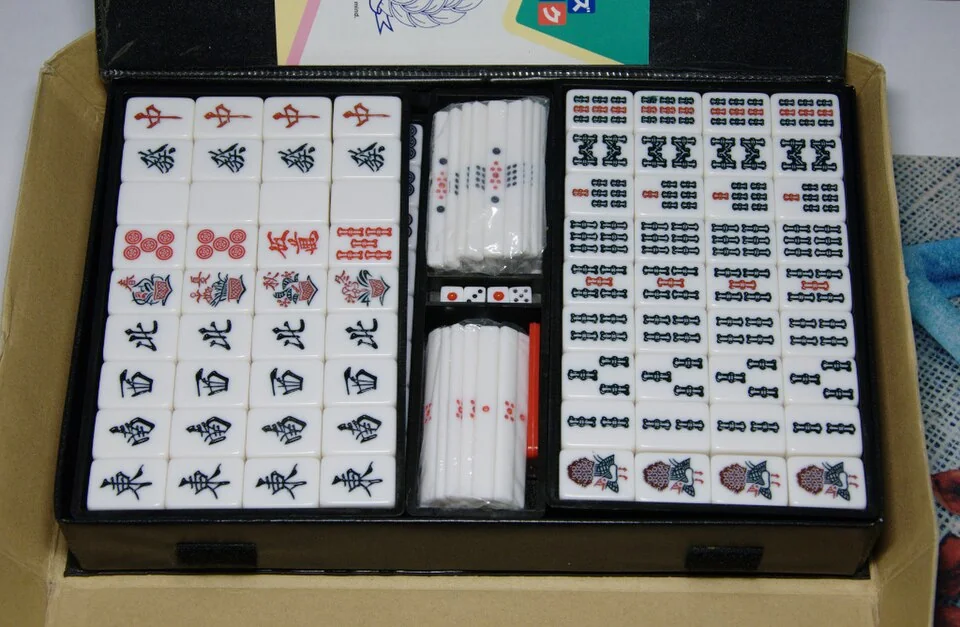
A Japanese mahjong set: one related tradition alongside the American annual-card game.
Image source & license
Aleksey Zhukov · CC BY-SA 2.0. WebP delivery copy; resized if needed, composition unchanged. Original image & full credit · License
Start earlier, in China
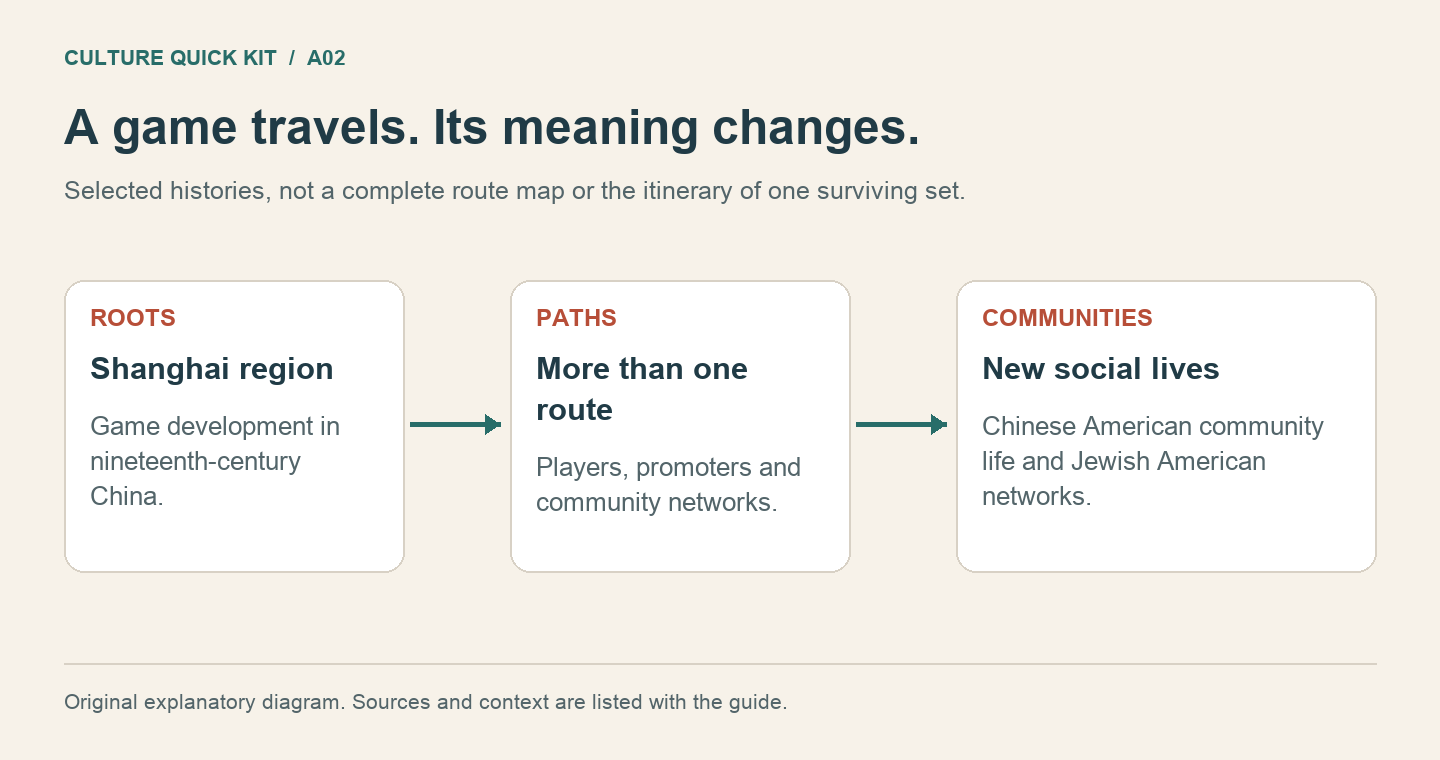
Historian Annelise Heinz traces mahjong’s development to the nineteenth-century Yangtze River Delta around Shanghai. By the early twentieth century, it was gaining popularity in Shanghai and Beijing. [S02]
Those place names give the story a starting point you can picture and investigate. They also invite a better question than who invented the whole thing: how did a game take shape, and what happened as more people encountered it? You can follow change without needing a single founding hero.
More than one route
In the early 1920s, Joseph Park Babcock, his wife, and business partners marketed mahjong to Americans. Heinz describes him as one of several introducers, not its inventor. She also discusses Chinese American community life and Jewish women’s social and philanthropic networks. [S02]
The Capital Jewish Museum includes Jewish American life in its exhibition account of the game. The exhibition is scheduled for spring 2027. [S03]
A game can move through a shop window, a club, or an invitation from a friend. Think of the different jobs those settings can do: getting noticed, learning together, and finding people you want to see again. These are ways to think about the documented histories, not a claim that every player followed the same path.
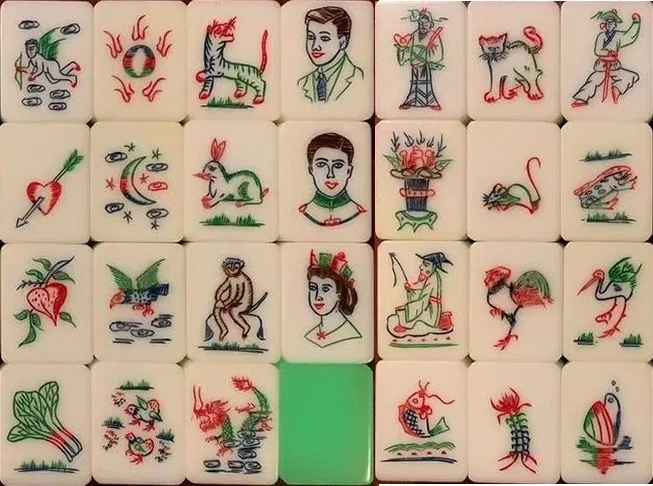
Decorated tiles bring the game’s material history into view. This set is contextual, rather than a documented migration exhibit.
Image source & license
Wenlongtian · CC0. WebP delivery copy; resized if needed, composition unchanged. Original image & full credit · License
Tell a story with room for people
Consider two hypothetical households learning the same version. One might pause often to explain a move. The other might save questions until the end. Both could use the same reference while making a newcomer’s evening feel different. This is an imagined comparison, not a report about particular families.
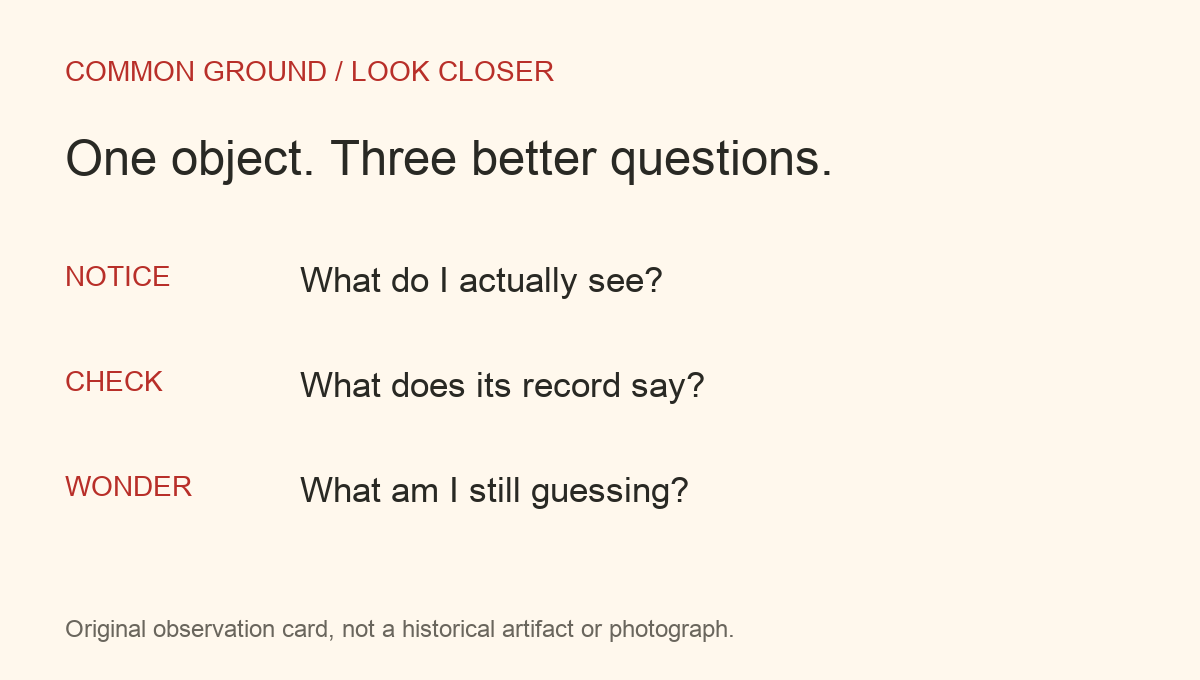
When you tell someone about mahjong, try three prompts: Roots, Paths, Communities. Where and when does the story begin? Which routes can you document? Whose connection are you describing? You do not need to fit every community into one answer.
Then leave space for a personal question: how did the person in front of you learn? Their answer can sit beside the documented history. Ask permission before retelling it, and keep clear which details come from a published source and which belong to that person’s experience.
3 optional questionsWant a tiny challenge?
A little practice, with room to try again.
Want a tiny challenge?
A little practice, with room to try again.
How did this land?
Just your reaction, kept in this browser. Tap again to change your mind.
A little trail to follow.
Want to dig into a detail? These links take you to the original sources. Our suggestions and imagined examples are labeled in the story.
- OPB: Historian Annelise Heinz on mahjong (opens in a new tab)
July 9, 2026 interview. Read for game forms, regional origins, American promotion, and community connections.
- National Mah Jongg League: Our history (opens in a new tab)
The organization’s account of its 1937 founding and annual card. Its rules should not be assumed to cover every mahjong version.
- Capital Jewish Museum: Mahjong, An American Obsession (opens in a new tab)
Exhibition description connecting mahjong with Jewish American life. Scheduled for spring 2027; this is not a report of a visit.
What game or pastime has found a place in your life, and who helped make it yours?
Your question, a memory, a different way your family does things — there's room for it here. These notes are just for you in this browser.
Downloads and copies include notes and corrections for this story. To send it to us, attach it yourself in an email to support@goodbye.help. Saved stories and practice scores stay out of the download.