In this story
A note from Common Ground
Common Ground editorial: distinguish documented details from our suggested ways of looking.
Follow the leaf
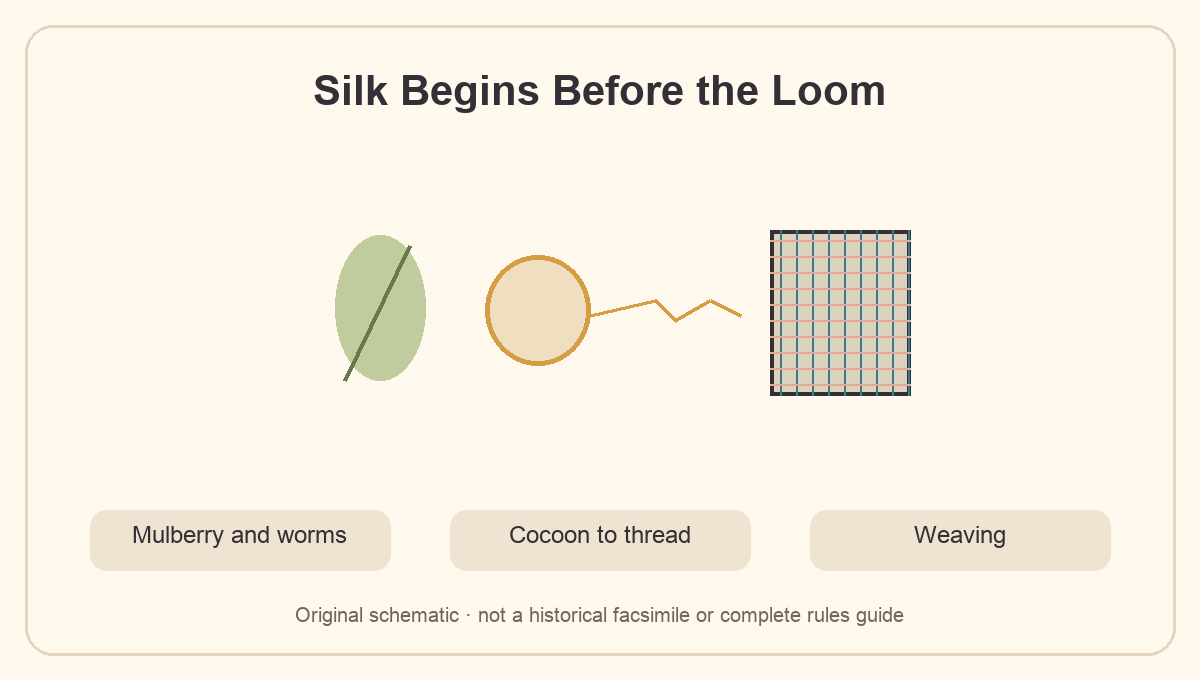
A silk scarf looks like a finished surface. UNESCO’s account of Chinese sericulture asks us to start much earlier: with mulberry cultivation and silkworm raising, followed by unreeling silk, making thread, designing, and weaving. Its heritage description centers on Zhejiang and Jiangsu and on Chengdu in Sichuan. This is a connected craft chain, not simply another name for weaving. [S1]
Media selection · Reviewed by the project owner on November 5, 2026. Context images do not replace the story’s cited evidence.
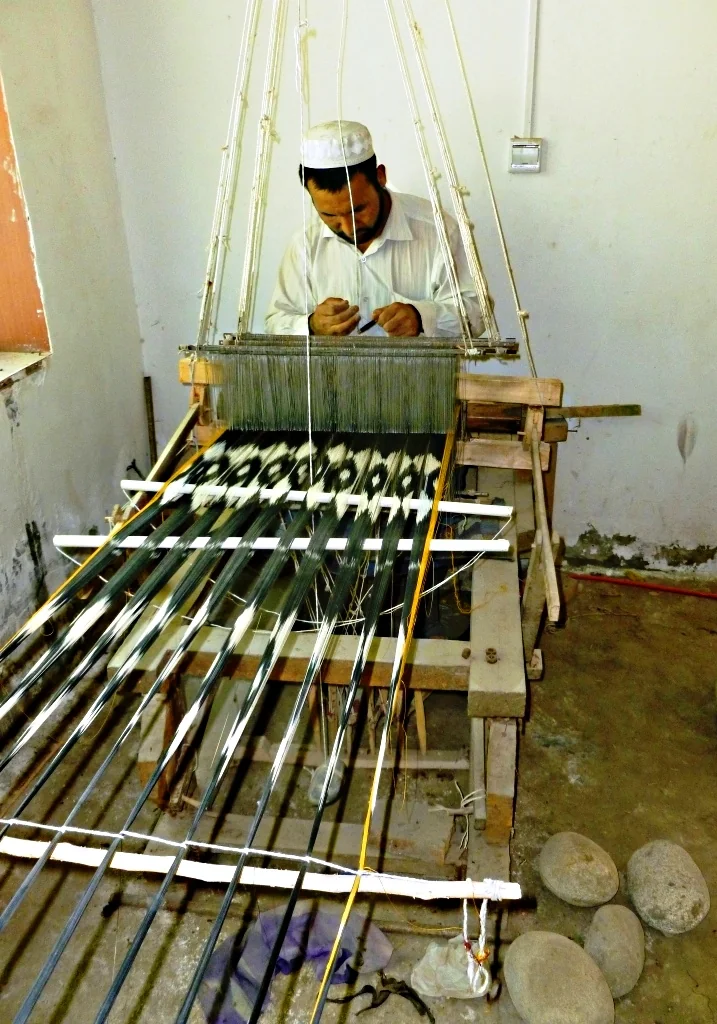
Silk weaving in Khotan, per the image record: one regional workshop scene.
Image source & license
John Hill · CC BY-SA 4.0. WebP delivery copy; resized if needed, composition unchanged. Original image & full credit · License
Skills move between people
The same account describes transmission within families and through apprenticeship, with techniques circulating in local groups. It also recognizes women’s traditional economic role in this work. These details shift attention from a single brilliant inventor to the people whose repeated work and teaching sustain a complicated practice. [S1]
A story has a different job
UNESCO also records performances about a Silkworm Goddess and seasonal offerings associated with silkworm farming. Such accounts tell us about cultural meaning and hopes surrounding production. A goddess story is not a dated invention record, and this article does not turn it into one. Nor should a description of these communities become a claim about what every Chinese household does. [S1]
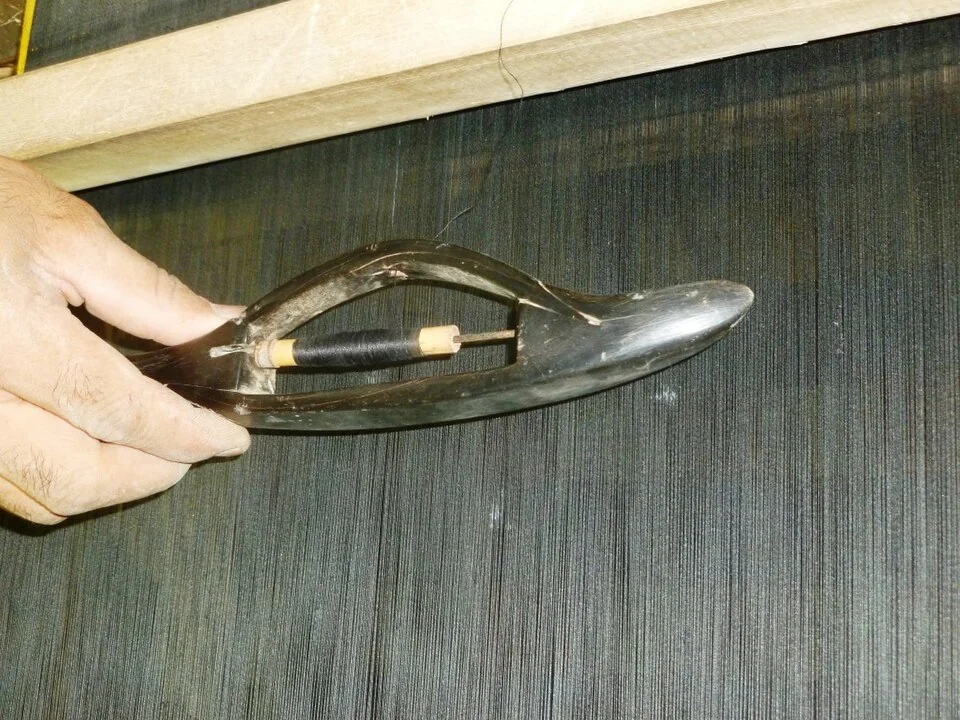
A weaving shuttle close up. One small tool sits within a much longer material process.
Image source & license
John Hill · CC BY-SA 4.0. WebP delivery copy; resized if needed, composition unchanged. Original image & full credit · License
Imagine a missing handoff
Here is an invented American scene: a sewing-circle member brings a silk scrap and asks everyone to name the work hidden behind it. One person notices the cloth’s design; another asks who prepared the thread. Nobody needs to pretend that the meeting reproduces a sericulture workshop. Its purpose is to make a finished material feel less anonymous.
Draw a chain on paper and circle the point where you know least. Perhaps you understand sewing but have never considered how thread is prepared. That uncertainty is a good place to begin a question. It is more useful than treating the word traditional as an explanation for every difficult step.
Practice noticing transmission
When you read a craft account, look for verbs that name teaching as well as making. Ask what a learner would need to observe, what a written checklist might leave unclear, and what evidence would answer those questions. These are prompts for further inquiry, not claims that we interviewed practitioners.
A scarf can then become an invitation to think about relationships: between stages of work, between learners and teachers, and between a finished object and the labor we seldom see. You do not have to master the whole process to replace a vague admiration with one specific, answerable question.
3 optional questionsWant a tiny challenge?
A little practice, with room to try again.
Want a tiny challenge?
A little practice, with room to try again.
How did this land?
Just your reaction, kept in this browser. Tap again to change your mind.
A little trail to follow.
Want to dig into a detail? These links take you to the original sources. Our suggestions and imagined examples are labeled in the story.
- UNESCO: Sericulture and silk craftsmanship of China (opens in a new tab)
Search index body excerpt only; direct page and related PDF returned human-verification screens. Supports listed craft stages, named regions, family/apprenticeship transmission, women’s economic role and recorded goddess performance; no invention date.
What detail changed your first impression?
Your question, a memory, a different way your family does things — there's room for it here. These notes are just for you in this browser.
Downloads and copies include notes and corrections for this story. To send it to us, attach it yourself in an email to support@goodbye.help. Saved stories and practice scores stay out of the download.